Dear Moderator,
I hope you are well. My A2 Coursework is complete, fully uploaded and ready for assessment. I hope you enjoy.
Thank you.
Jake Hawkings
Wednesday, 26 February 2014

Evaluation: Question 4
Script
During the entire coursework, various technology was used in order to help the whole project come together. Some of the technology I used was extremely helpful, however, there were some bits of it that were not.
During the research and planning stage of my coursework, I relied quite heavily on both the video sharing website Youtube, and also music channels on the television, such as MTV. Both of these were relatively useful in finding music videos to study for conventions, however the TV was not useful in finding music videos specific to my genre of K-Pop. I did find Youtube to be extremely useful, particularly due to the fact that I could pause a video for shots to see which were more conventional. Youtube also had a much larger variety for me to look at so I could find exactly what was useful for me and how I wanted my video to look. (Example)
I also used Facebook quite frequently during the research and planning stage in order to find popular K-Pop bands and find the bands' videos and ones similar to them. Facebook's "Pages You May Also Like" feature came in to play a lot here and allowed me to find a lot of useful examples and videos that I wanted to borrow styles from. (Example)
Microsoft Powerpoint helped me to plan and order my pitch successfully and allowed me to construct my ideas and thoughts how I wanted them to be through the use of the built in HTML linker. (Example) This then allowed me to display all of my Media 2.0 technologies on a more simple format and allowed me to present them neatly during my pitch.
During the construction of my advert and digipack, I used Adobe Photoshop in order to both create and manipulate images. I specifically found the Magnetic Lasso tool to be extremely helpful when cropping images and cutting them away from their backgrounds. From doing that, I was able to create a totally different backdrop for both of my print production pieces that displayed my genre of K-Pop much more effectively, shown here.
The camera I used for my photoshoot was a Nikon D60 DSLR camera. (Show) Primarily, I manually altered the zoom and focus, in order to achieve the shot that I wanted, which I later used in my print production work. When filming, I uses a Panasonic HD camera. (Show) I altered the depth of field to make sure that my actors were the main focal point of my video, and I also used a focus pull in some of my shots.
To evaluate my work, I have again used the social media site Facebook to gain audience feedback and response. I created a specific group on there in order to gather a large amount of feedback in a small amount of time. I also used the video-calling program Skype (Show Skype) to conduct an interview that worked in the same way that a face-to-face one would.
The final piece of technology that I used in my evaluation was the website "Blogger". Blogger has helped me throughout my entire coursework to order my ideas, keep everything saved in one place and even act as a sort of mood board for my pieces.
One piece of technology that I wish I had used, however, is the website "TimeToast". TimeToast allows one to create a timeline of events to help schedule work and work progress. I believe that if I had used this site, I would have managed my time much more effectively than I have done, and thus had more time to perfect my work.
Evaluation: Question 3
To receive feedback from various sources about my work, I decided to conduct a Facebook questionnaire on numerous people, both within my target audience and not within it, I conducted a detailed online interview and also recorded someone watching the video and asked them questions afterwards. I wanted to ensure that I would get a range of feedback from a range of sources and thought that the best way to do that would be to use more than one technique.

My Facebook survey indicated that the music video was interesting and fun to watch, but did definitely have some down sides and had various aspects that needed more work. One common aspect that was mentioned a lot for needing more work was the backdrop and the background, or rather, the lack of. My original idea was to have a completely white or completely black backdrop created with the use of a large sheet. However, I found that this idea was not feasible, especially when trying to fit more than one of my actors in the shot at the same time. Despite this negative feedback, a lot of the other feedback that I gathered was quite positive and suggested that the video was enjoyable and was well edited.


My Facebook survey indicated that the music video was interesting and fun to watch, but did definitely have some down sides and had various aspects that needed more work. One common aspect that was mentioned a lot for needing more work was the backdrop and the background, or rather, the lack of. My original idea was to have a completely white or completely black backdrop created with the use of a large sheet. However, I found that this idea was not feasible, especially when trying to fit more than one of my actors in the shot at the same time. Despite this negative feedback, a lot of the other feedback that I gathered was quite positive and suggested that the video was enjoyable and was well edited.
Another main aspect of my video that was noticed for needing a bit of extra work was the lip-syncing and miming. The main issue that I found with the lip-syncing was that almost all of the lyrics in my chosen song are in Korean, therefore making the lyrics a lot harder to learn. I tried to overcome this issue by creating a script of the lyrics phonetically, which seemed to be successful on the most part. However, this did not work for the entire video, and therefore the lip-syncing was not as good as it could've been. If I were to try this again, perhaps more practice of the lyrics would help before hand.
I also decided to conduct an online interview via Skype in order to recreate the feeling of a face-to-face interview where one can gather much more in-depth information in regards to a topic. During said interview, I found the same common themes that I found through my Facebook feedback, but I managed to get more explanations as to the thoughts.
I also recorded someone reacting to my video and answering a few questions about it in order to gain further insight into the minds of my audiences and the viewers. Both of these can be found on a playlist below.
Katz and Blumler devised what is known as "The uses and gratifications model" which states that all audiences will use the media to fulfil various "needs", these needs being information, personal identity, social interaction and entertainment. My video aimed to give my audience role models to copy and be like, as is stereotypically done in the genre of K-Pop. I tried to also make sure that a lot of eye contact and direct in address was used in the final cut in order to help my audience construct a personal identity in relation to the role models in the video.
However, I also wanted to make sure that the entertainment needs of my audience was satisfied as I feel that it is a crucial part of a music video, particularly one aimed at such a large audience as K-Pop is. I tried to do this with bright colours, fast paced editing and a continuous reliance on the role models having fun and enjoying themselves.
However, I also wanted to make sure that the entertainment needs of my audience was satisfied as I feel that it is a crucial part of a music video, particularly one aimed at such a large audience as K-Pop is. I tried to do this with bright colours, fast paced editing and a continuous reliance on the role models having fun and enjoying themselves.
Evaluation: Question 1
During the initial stages of planning, I researched various other K-Pop videos in order to see if there were any running conventions between them and, if so, what they were. I found clear links between groups such as Girls' Generation, f(x) and 2NE1, all of them being well-known, established K-Pop groups. Their videos consist of lots of bright colours and fast cuts, whilst also trying to sell the group as role models for the target audience. The usual target audience for a K-Pop video is that of pre-teen, teen and young adult females, so using the group as role models is part of almost every video.
I over-exposed a lot of the clips and altered some other effects such as the vibrance and contrast in order to make them brighter and more appealing because of the fact that I'd have a relatively young target audience. I attempted to put up and recreate the typical blank backdrop that is used in the more generic and stereotypical videos. This is usually to add even more emphasis to the main stars and portray them as role models even further.
I decided that I wanted to follow most of the conventions of K-Pop girl group videos and thus gathered a lot of inspiration from the larger and more well known acts, particularly the videos shown above. My video had some more unique elements, such as a heavy use of filters, however I primarily wanted my video to be quite redundant. A lot of my video is redundant and relatively unoriginal, however I think the parts that were more entropic were definitely a welcome feature according to my audience feedback, such as my heavy use of filters.

I actively chose not to include too many dance sequences in my video, however, as I think that my chosen song felt slightly more upmarket and more adult than a lot of the stereotypical K-Pop videos currently on the market. I believe that there is a sort of correlational link between how young an audience is thought to be and the amount of dance sequences that reside in the video, and I didn't aim my video at children.
I over-exposed a lot of the clips and altered some other effects such as the vibrance and contrast in order to make them brighter and more appealing because of the fact that I'd have a relatively young target audience. I attempted to put up and recreate the typical blank backdrop that is used in the more generic and stereotypical videos. This is usually to add even more emphasis to the main stars and portray them as role models even further.
I decided that I wanted to follow most of the conventions of K-Pop girl group videos and thus gathered a lot of inspiration from the larger and more well known acts, particularly the videos shown above. My video had some more unique elements, such as a heavy use of filters, however I primarily wanted my video to be quite redundant. A lot of my video is redundant and relatively unoriginal, however I think the parts that were more entropic were definitely a welcome feature according to my audience feedback, such as my heavy use of filters.
Steve Neale suggested that it was very important for a music video to have both entropic and redundant elements in order to ensure that an audience don't see it as "too repetitive or too different". Too much repetition and redundancy can often lead to an audience becoming bored with the video as it will have nothing new to offer them. On the other hand, too much difference and entropy can lead to an audience becoming confused due to how little they will recognise and they will not know how to respond to the video. It is important to have a decent balance of the two in order to interest the audience with new ideas, but also give them lots of familiar ideas, too.
I actively chose not to include too many dance sequences in my video, however, as I think that my chosen song felt slightly more upmarket and more adult than a lot of the stereotypical K-Pop videos currently on the market. I believe that there is a sort of correlational link between how young an audience is thought to be and the amount of dance sequences that reside in the video, and I didn't aim my video at children.
Friday, 31 January 2014
Friday, 29 November 2013


Tuesday, 19 November 2013
Final Casting
After a long journey, we settles on our four cast members who will feature in our print work and music video!
They are:
- Gemma Gormley
- Katie McGorman
- Elisha White
- Tash Sampson
These four are all excited for the video and have already delivered a promising photoshoot as seen in previously posted pictures!
They are:
- Gemma Gormley
- Katie McGorman
- Elisha White
- Tash Sampson
These four are all excited for the video and have already delivered a promising photoshoot as seen in previously posted pictures!
Target Audience Feedback
Before creating my music video, I wanted to see what our target audience (14-19 year olds) would think of our ideas so far and what they'd expect from the genre of K-Pop.
Hayley: "It's really different and unique. It's not your usual or everyday music, it's something quite new."
Charlotte: "I reckon it'd be usually for people younger than me, so like early teens. I've listened to some and it's not my style, but I can appreciate the fun side of it."
Mark: "The music comes across as though it's meant to be not too serious and just for a good time, which I guess is what pop music represents, really. I think it appeals more to girls than boys, but it's just meant for a good time."
Becky: "I love a bit of K-Pop! It's just so fun and entertaining. We don't know the words off hand, but that kind of adds to the effect. You don't have to think about anything when listening to it, you just enjoy it generally.
To conclude, we can clearly see that K-Pop is thought to be a fun, visually entertaining genre that's not supposed to be taken too seriously. This is exactly what I hope to achieve in my music video as I believe that it is a brilliant example of the genre and a quirky and lively video would represent it well.
Hayley: "It's really different and unique. It's not your usual or everyday music, it's something quite new."
Charlotte: "I reckon it'd be usually for people younger than me, so like early teens. I've listened to some and it's not my style, but I can appreciate the fun side of it."
Mark: "The music comes across as though it's meant to be not too serious and just for a good time, which I guess is what pop music represents, really. I think it appeals more to girls than boys, but it's just meant for a good time."
Becky: "I love a bit of K-Pop! It's just so fun and entertaining. We don't know the words off hand, but that kind of adds to the effect. You don't have to think about anything when listening to it, you just enjoy it generally.
To conclude, we can clearly see that K-Pop is thought to be a fun, visually entertaining genre that's not supposed to be taken too seriously. This is exactly what I hope to achieve in my music video as I believe that it is a brilliant example of the genre and a quirky and lively video would represent it well.
Music Video Analysis
Analysis 1: f(x) – Electric Shock
The music video is heavily reliant on the stereotypical genre
characteristics of a girl band, particularly one in the sub-genre of K-Pop.
This sub-genre usually consists primarily, if not entirely, of young women
dressed in fairly generic outfits but usually with a western element, for
example, one of the women in this video wears an ACDC band shirt.

The video also consists mainly of up-close shots or shots of all the girls as a whole at the same time as them dancing, singing or perhaps both. The shots in this video are positioned ever so slightly below eye level or sometimes quite far below it in order to convey the band’s importance and make sure that the audience knows that the band are the main subject. The band also manages to wear clothing that allows the audience to get a full view of their physique without the group’s clothes being considered slightly scandalous. This is a typical formula for the genre of Pop and K-Pop and therefore supports Michael Shore’s theory that music videos are recycled styles that contain the views of adolescent males, particularly with the use of power, girls and wealth. He then believes that this all conveys into clichéd imagery and “soft-core pornography”.


The video also gives a sense of synaesthesia throughout, too, with the use of a fun and catchy beat being mimicked by the band also dancing around and having fun, too. They also do things in time with the music, helping to add to the element of synaesthesia. The music video also expresses the typical ideologies of the target audience through the band members, for example, having perfect skin, looking young and being thin and healthy. This is a fairly usual ideology as the target audience of this genre are females between the ages of 16-23 and they supposedly have aspirations primarily based on looks and looking attractive, just as the band members represent. Ultimately, the stars in the video are commodities that the record companies use in order to sell the brand that is their image and the values of which they represent. This is often done by trying to make them look more relatable, too, by using lots of close-up shots and lots of action matches.

Analysis 2: Big Bang – Fantastic Baby
This video is also relatively reliant on some of the generic
elements of a usual Pop/K-Pop boy band, however, it does introduce some other
interesting elements that are seen less so in the said genres. For example, on
more than one occasion, the males objectify themselves and are represented as
sexual objects. This is done to a point where even the camera is used to split
up the male’s body parts as it normally would a female in music videos, as
shown below. This, therefore, challenges current imagery and conventions and
this is thought to be due to the rise in sexualisation in the media industry as
stated by Reichert and Carpenter in 2004.

The clothing normally worn is also a relatively new element to Pop/K-Pop boy bands as, in this video, the males wear quite unconventional clothing and they all look remarkably different from one another. This contrasts older conventions as it was thought that males would usually wear similar, if not the same, outfits.

Similarly to the music video for Electric Shock, this video
uses frequent up-close shots of the males in order to help the audience to
establish with the group. However, contrasting with the other video, it has an
ever-so –slight narrative involving a corporation who are opposed to music and
the band fighting against it. This is often seen as being quite unusual for a
typical pop video and is not usually seen with a boy band, either. The majority
of the shots are also on eye-level with the main males, too, as it makes the
band seem far more relatable to the audience than if the camera was above or
below eye-level.

Michael Shore’s theory is also
supported by this music video as the video itself contains many elements of
power, girls and wealth, once again. He describes music videos as a recycled
style that contains information overload and is fantasised by adolescent boys.
Stereotypically, this would be heavily supported by the video as it addresses
all 3 of the previously stated elements.
The video and lyrics also have a primarily disjunctive link as most of the lyrics have no possible link to what’s going on in the video. There is, however, a rare, occasional moment in which the lyrics will use the word “clap” and the band in the video will clap accordingly, giving a slight illustrative link between the two elements of the song.

However, bar that,
they have a primarily disjunctive link. This is all in accordance with Andrew
Goodwin who theorised the three ideas about the links between the lyrics and
visuals, the three of them being illustrative, disjunctive and amplifying.
The video also has a slight element of synaesthesia at
certain points, too. For example, during a scene when one of the band members
is dressed relatively tribally, the music involves more drums and has a more
tribal undertone, as shown below.

The video often also expresses values held by their target
audience, presumably being males and females in the age range of 16-23 once
again. For the males, they represent the ideas of being attractive, being in
good shape, attracting women and having power and money, which is all thought
to be the ideal “dream” for men of these ages. This also supports Michael
Shore’s theories. For the females, they are represented as being good-looking,
but not being arrogant about it, as well as being in relatively good shape and
having money and power. All of these are relatively similar to that of what they
represent to the males, just slightly different to who they are of. In short,
they represent themselves as having males who want to be them and females who
want to be with them.
Sources List:
Storyboard
Here is our animated storyboard. This has xhelped us to really get our ideas in order about how we want our music video to be set.
Friday, 15 November 2013


Thursday, 14 November 2013


Monday, 11 November 2013
Final Sheet Change
So, we've finally decided against those sheets because they were filthy and practically grey and found some that already happened to be in my house! You'd think I would've looked at them before hand and realised we had the perfect sheets at home.
The photoshoot is all prepared ready for Wednesday, so pictures Thursday at the latest.
Things are moving forwards! :D
The photoshoot is all prepared ready for Wednesday, so pictures Thursday at the latest.
Things are moving forwards! :D
Friday, 8 November 2013
Final Sheets Update
We have actually now found sheets that we are going to be using as a backdrop in our music video!
http://www.tesco.com/direct/tesco-flat-sheet/465-6555.prd?pageLevel=&skuId=609-2260Risk Assessment of Filming Area
|
What the
risk is
|
Potential outcomes
|
How to avoid
it
|
Who’s in
charge
|
|
Loose wires
|
Fall, trip
and/or possible death
|
Tape wires
to the floor and make them as visible to the cast as possible
|
Jake
|
|
Falling off
stage
|
Hurt, broken
limbs and/or possible death
|
Make it clearly
visible where the stage ends
|
Jake
|
|
Bright
lights
|
Damaged or
challenged eye site.
|
Not let the
cast look directly at lights for an extended period of time
|
The cast
|
|
Falling over
white sheets
|
Hurt/injury
|
Tape or staple
the sheets to their attached surface eg Floor or wall
|
Nick and I
|
Monday, 4 November 2013
Location + Set Update
The style of sheet we are looking for is this or similar to it.

Thursday, 24 October 2013
Costume Idea 2
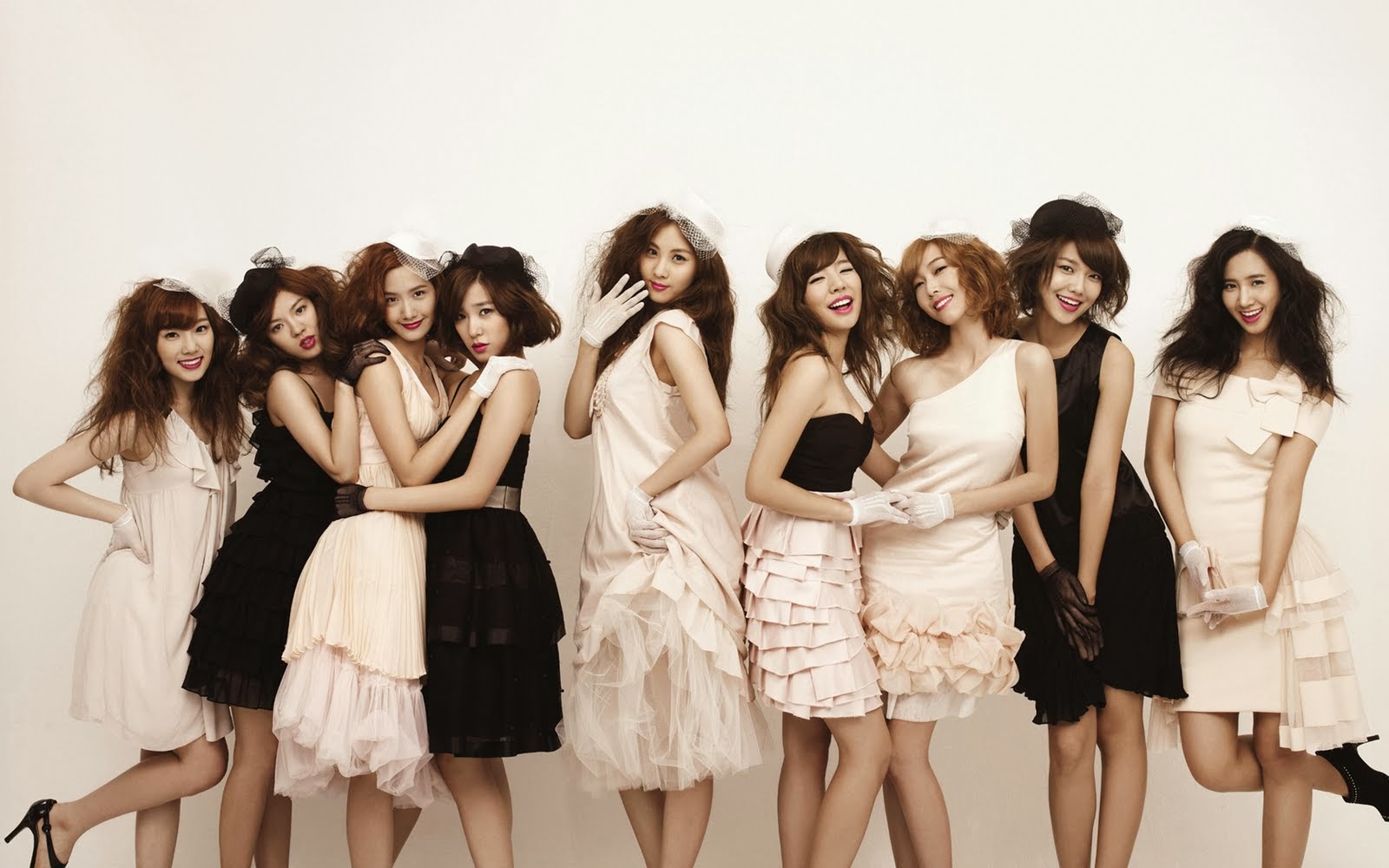
We've settles on the idea of the girls wearing a relatively nice dress each that makes them look slightly similar but still look individual.
For example:
For example:


Costume Ideas
Our costume choices for our music video are going to be relatively simple, yet effective and eye-catching.
Here are a few ideas:
Here are a few ideas:


Subscribe to:
Posts (Atom)